Whether you're looking to optimize your Salesforce solution or need custom development,
our team is here to help you unlock the full potential of Salesforce.
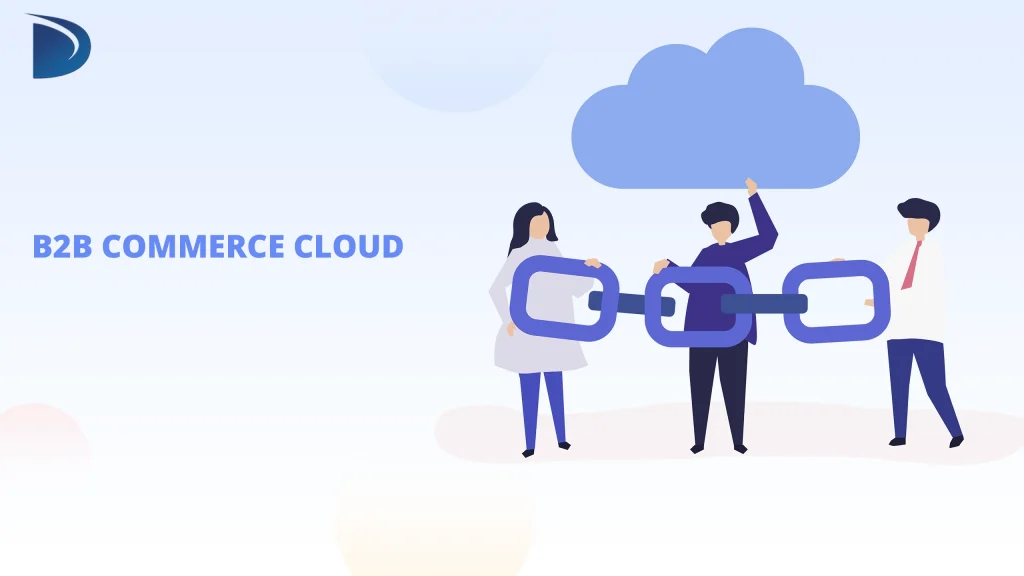
B2B e-commerce is growing rapidly, and businesses need the right tools to keep up. Salesforce B2B Commerce Cloud enables companies to sell online easily, providing a seamless buying experience and intelligent automation. With its robust features, businesses can streamline sales, manage orders efficiently, and accelerate growth.
What is B2B E-Commerce?
B2B e-commerce involves businesses selling products or services to other businesses online. Unlike B2C, where companies sell directly to consumers, B2B focuses on bulk orders, contract pricing, and long-term relationships.
For example, a manufacturer selling parts to an automobile company through a digital portal is engaging in B2B e-commerce. Instead of handling orders manually, businesses use online platforms to streamline sales, automate processes, and improve the buying experience. With solutions like Salesforce B2B Commerce Cloud, companies can build customized storefronts, manage pricing, and integrate with CRM systems to keep everything connected.
B2B vs. B2C E-Commerce: Key Differences in Salesforce Commerce Cloud
Feature
B2B Commerce Cloud
B2C Commerce Cloud
Target Audience
Businesses buying in bulk from suppliers, manufacturers, or distributors
Individual customers shopping for personal use
Buying Process
Complex, involving negotiations, approvals, and bulk orders
Simple, fast, and based on impulse or personal preference
Engaging storefront, fast checkout, and personalized recommendations
Order Management
Handles large transactions, recurring orders, and scheduled deliveries
Streamlined for smaller, one-time purchases
Examples
A manufacturer selling industrial parts to retailers
A brand selling fashion accessories directly to consumers
Types of B2B Commerce Cloud
Salesforce B2B Commerce Cloud provides a range of e-commerce solutions designed to meet the needs of different businesses. These solutions help companies increase sales, manage customer interactions, and grow efficiently. The main types are:
1. Business-to-Business (B2B) E-commerce
This solution is designed for businesses that selling products or services to other businesses.
It helps manage sales processes, large inventories, and custom client pricing.
Features such as bulk ordering, quick reordering, and negotiated pricing make it ideal for wholesalers, distributors, and manufacturers.
B2B2C enables businesses to sell to both other businesses and end consumers.
It allows brands to manage sales to businesses and consumers through a single platform.
Salesforce B2B Commerce Cloud supports managing wholesale and retail customers in a single storefront.
3. Wholesale E-commerce
This solution targets businesses handling bulk transactions and complex pricing models.
It streamlines the management of large orders, customer-specific pricing, and custom order workflows.
Key features include tiered pricing, bulk discounts, and real-time stock updates.
4. E-commerce for Manufacturers and Distributors
Designed for manufacturers and distributors, this solution helps manage products and distribution channels.
It enables businesses to control inventory and handle complex orders efficiently.
The platform supports management of dealer relationships and pricing structures.
5. Direct-to-Business (D2B) E-commerce
D2B allows businesses to sell directly to other companies without intermediaries.
It streamlines direct sales, order management, and customer relationships.
Salesforce B2B Commerce Cloud enables businesses to connect directly with other companies for sales and orders.
Key Features of Salesforce B2B Commerce Cloud
Customizable Storefronts:
Salesforce B2B Commerce Cloud enables businesses to create online stores that showcase their unique branding. You can customize the design and layout to meet the specific needs of your business customers, ensuring a personalized and consistent experience across platforms.
Pricing Flexibility:
This feature allows businesses to set different pricing structures for customer groups. Whether offering bulk discounts, negotiated pricing, or seasonal promotions, businesses can easily adjust prices for various customer segments.
Advanced Product Catalog Management:
With B2B Commerce Cloud, businesses can efficiently manage large product inventories. The platform provides a detailed view of each product, making it easy to categorize, update, and search the catalog, which is essential for businesses with a wide range of products.
Integration with Salesforce CRM:
Salesforce B2B Commerce Cloud integrates seamlessly with Salesforce CRM, providing businesses with a unified view of their customer data. This integration enhances customer relationship management, from order tracking to personalized interactions, all in real time.
Order Management and Automation:
The platform automates the order process from initial request to final delivery, reducing time spent on manual tasks. Businesses can set rules to manage orders based on specific conditions, improving efficiency and minimizing errors.
Mobile-Optimized:
Salesforce B2B Commerce Cloud is designed to work seamlessly across devices, including desktops, tablets, and smartphones. Customers can browse, order, and manage their accounts from anywhere, making it easier for businesses to serve clients on the go.
Real-Time Analytics:
Businesses can access up-to-date information on sales, customer behavior, and overall performance. This feature helps decision-makers analyze trends, track key metrics, and make informed decisions to drive growth and improve strategies.
Scalability:
As businesses grow, Salesforce B2B Commerce Cloud scales with them. The platform is designed to accommodate more products, increased traffic, and larger order volumes, ensuring businesses can expand without performance issues.
How to Get Started with B2B Commerce Cloud
Getting started with Salesforce B2B Commerce Cloud is straightforward, allowing businesses to quickly implement its features for growth. Follow these steps to set up your platform:
1. Assess Your Business Needs
Understand your business requirements before you begin.
Determine whether you need customizable storefronts, product management, or CRM integration.
This will help you focus on the features that matter most to your business.
2. Sign Up for Salesforce B2B Commerce Cloud
Visit the Salesforce website and select the right package for your business.
Salesforce offers several options based on your business’s size and needs.
3. Set Up Your Online Storefront
Salesforce B2B Commerce Cloud lets you easily customize your storefront.
Create a branded, user-friendly online store to showcase your products.
No technical knowledge is required, as the platform features an intuitive setup process.
4. Integrate with Salesforce CRM
Salesforce CRM integration is a key benefit of using this platform.
Manage customer data and sales processes in one place to improve efficiency and customer satisfaction.
5. Configure Product Catalogs and Pricing
Upload product information and manage your product catalogs easily.
Use dynamic pricing models to customize pricing based on customer needs.
Ensure accurate, up-to-date product details for your customers.
6. Set Up Payment and Order Management
Choose from multiple payment gateways for smooth, secure transactions.
The order management system helps you track and process orders efficiently.
7. Customize the User Experience
Personalize the shopping experience with product recommendations and tailored promotions.
Ensure the checkout process is smooth and user-friendly.
8. Train Your Team
Provide training for your sales and customer service teams on using the platform.
Salesforce offers training resources and support to help your team get the most out of the platform.
9. Test the Platform
Test your platform thoroughly before going live.
Check all functions, such as product search, payment, and order placement, to ensure everything works correctly.
10. Go Live and Monitor Performance
Once tested, launch your online store and make it accessible to customers.
Regularly monitor performance using analytics and customer feedback to optimize the experience.
Challenges and Best Practices for Implementing B2B Commerce Cloud
CRM systems significantly improve customer experience by centralizing customer data and providing businesses with deeper insights. Small businesses, in particular, benefit from CRM by increasing customer satisfaction, streamlining processes, and building loyalty.
With tools like Salesforce CRM, businesses can streamline customer interactions, making it easier to track, manage, and resolve issues. Integrating CRM systems with other business tools further improves customer service, allowing data-driven decisions that optimize every aspect of the customer journey. This demonstrates how CRM systems enhance the customer experience and drive long-term success.
Challenges
Best Practices
Integrating with Existing Systems
Plan carefully and work with Salesforce experts to help the system integrate smoothly.
Customization Needs
Use Salesforce features to create solutions or work with developers for specific needs.
Managing Large Product Catalogs
Use Salesforce tools to organize and display products in a clear, easy-to-manage way.
Data Migration
Prepare data by cleaning it before moving it to Salesforce, to avoid mistakes.
Consistent Customer Experience
Use tools for multi-channel communication to provide the same experience across all platforms.
Order Management and Automation
Set up automatic workflows for faster processing and keep customers updated in real-time.
Flexible Pricing
Use Salesforce to set dynamic pricing options that suit different customer needs.
Scalability
Regularly check the system’s ability to grow and upgrade when more sales or inventory are needed.
Payment Platforms and Considerations for B2B Commerce Cloud
Payment Methods:
Salesforce B2B Commerce Cloud supports various payment methods, including credit cards, bank transfers, and invoicing.
Select payment options that are convenient and commonly used by your customers.
Platform Integration:
Easily integrate popular payment platforms such as PayPal, Stripe, and Authorize.Net with Salesforce B2B Commerce Cloud.
Integration ensures secure transactions and reduces payment errors.
Payment Security:
Ensure your payment platform complies with industry security standards, such as PCI-DSS.
Salesforce B2B Commerce Cloud provides built-in security, but you can add additional encryption and fraud protection tools for extra safety.
Subscription Payments:
For businesses with recurring payments (subscriptions), Salesforce B2B Commerce Cloud can automatically manage billing, invoicing, and renewals.
This is ideal for businesses with long-term contracts or services.
Localized Payment Options:
Salesforce B2B Commerce Cloud supports global payments, serving international customers.
You can offer localized payment methods tailored to different regions, ensuring convenience for customers worldwide.
Payment Tracking:
Track payments and manage invoices easily using Salesforce’s reporting tools.
Keep financial records organized and monitor payment statuses to ensure smooth financial operations.
Conclusion
Salesforce B2B Commerce Cloud helps businesses manage online sales and deliver better customer experiences. With customizable storefronts, smart automation, and powerful CRM integration, businesses can streamline operations and focus on growth.
Whether you handle bulk orders or complex pricing, B2B Commerce Cloud provides the flexibility and tools to meet your unique needs. If you’re ready to elevate your B2B e-commerce, Salesforce B2B Commerce Cloud could be the solution to help you succeed.
Shyam Agarwal is an experienced technology professional with over 13 years in the industry. He has successfully delivered a wide range of projects, specializing in Salesforce consulting, development, and administration. Shyam helps businesses implement customized solutions that fit their needs, and he also has expertise in mobile and web application development.




 Shyam Agarwal

 Dadhich Rami