Businesses generate vast amounts of customer data, but without proper management, this data often becomes scattered across different platforms, making it difficult to use effectively. Salesforce Data Cloud addresses this issue by consolidating all customer data in a centralized location, enabling businesses to better understand their customers and make more informed, data-driven decisions.
What is Salesforce Data Cloud?
Salesforce Data Cloud is a real-time, AI-powered platform that collects, organizes, and analyzes customer data from multiple sources. It helps businesses create a 360-degree customer profile by combining data from CRM systems, marketing platforms, websites, mobile apps, and third-party systems.
With AI-driven insights and automation, businesses can deliver personalized experiences, enhance customer engagement, and increase sales.
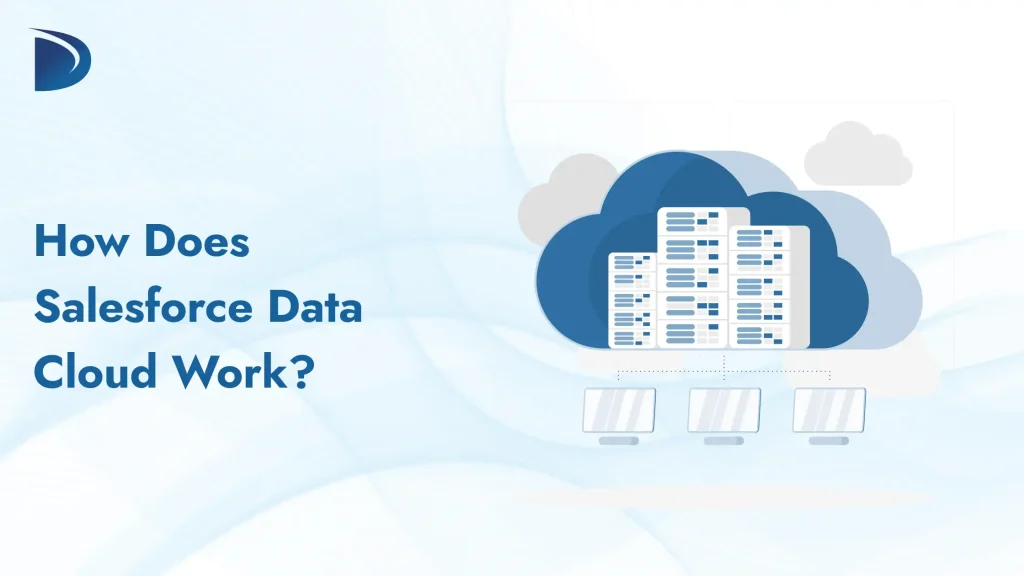
How Does Salesforce Data Cloud Work?
1. Data Collection & Integration
Salesforce Data Cloud collects data from multiple sources in real time, including:
- CRM systems (Salesforce Sales Cloud, Service Cloud, etc.)
- Websites and mobile apps (customer behavior, interactions, and preferences)
- Marketing platforms (email campaigns, ads, and social media engagement)
- E-commerce and POS systems (purchase history and transactions)
- Third-party apps and external databases (customer data from partner platforms)
2. Data Harmonization & Identity Resolution
Once collected, the data is cleaned, organized, and structured. AI-powered identity resolution matches and merges customer data from different sources into a single profile, eliminating duplicates and providing a complete, accurate view of each customer.
3. AI-Powered Insights & Analytics
With all customer data consolidated, Salesforce Einstein AI analyzes trends, predicts customer behavior, and segments users by their interests. Businesses can use this data to:
- Understand customer preferences and habits.
- Predict future actions based on past interactions.
- Segment customers for more effective targeting.
- Make data-driven marketing and sales decisions.
4. Real-Time Data Activation
Salesforce Data Cloud makes customer data actionable by connecting it with other Salesforce applications, such as
- Marketing Cloud: Personalizes email campaigns and ad targeting.
- Sales Cloud: Helps sales teams identify high-value leads.
- Service Cloud: Improves customer support with real-time data.
- Commerce Cloud: Enhances online shopping experiences with AI-driven recommendations.
This allows businesses to engage customers with relevant content, offers, and services at the right time.
5. Security, Compliance & Scalability
Salesforce Data Cloud is built on Hyperforce, a secure and scalable cloud infrastructure. It complies with global data privacy regulations such as GDPR and CCPA, ensuring that customer data is protected and used ethically.
Key Features of Salesforce Data Cloud
- Unified Customer Profiles: Merges data from multiple sources into a single, real-time profile for a comprehensive view of each customer.
- AI-Powered Insights: Uses machine learning to provide customer predictions and identify emerging trends.
- Real-Time Activation: Enables businesses to instantly use customer data across marketing, sales, and service functions.
- Pre-Built Connectors: Integrates seamlessly with Salesforce products and third-party applications for easy connectivity.
- Scalable Infrastructure: Efficiently manages large data volumes while maintaining security and compliance.
Latest Updates
- Einstein AI and GPT Integration: Uses AI for predictive analytics and customer recommendations.
- Faster Data Processing: Improved real-time data ingestion and activation.
- Advanced Segmentation and Personalization: Enables more precise customer targeting for ads and campaigns.
- No-Code/Low-Code Data Mapping: Makes it easier for businesses to integrate data without technical expertise.
- Global Expansion with Hyperforce: Supports additional regions for compliance and scalability.
Benefits of Using Salesforce Data Cloud
- Better Customer Understanding: Salesforce Data Cloud consolidates data from multiple touchpoints, providing businesses with a comprehensive view of customer behavior, preferences, and interactions. This enables deeper insights into customer needs and expectations.
- More Personalization: Salesforce Data Cloud leverages real-time data to enable businesses to deliver tailored content, offers, and recommendations based on each customer’s specific behavior, increasing engagement and satisfaction.
- Improved Decision-Making: Salesforce Data Cloud uses AI-powered insights and predictive analytics to help businesses make data-driven decisions. It optimizes marketing campaigns, sales strategies, and customer service efforts, leading to better results.
- Seamless Integration: Salesforce Data Cloud integrates smoothly with existing Salesforce products such as Sales Cloud, Service Cloud, and Marketing Cloud, as well as third-party applications, ensuring a unified and streamlined workflow across all systems.
- Enhanced Security and Compliance: Salesforce Data Cloud protects customer data by adhering to strict industry regulations and compliance standards, such as GDPR, and by offering robust security features like encryption, authentication, and data access controls.
- Scalable and Flexible: Salesforce Data Cloud’s cloud-based infrastructure scales to accommodate growing data volumes and evolving business needs, allowing businesses to continue innovating without limitations.
- Faster Time to Market: Pre-built connectors and out-of-the-box functionalities enable businesses to quickly implement and leverage Salesforce Data Cloud, accelerating the time to market for data-driven initiatives.
- Improved Customer Engagement: With a complete and unified customer view, businesses can engage more effectively with customers, anticipate their needs, and deliver proactive, personalized interactions at the right time.
- Optimized Resource Allocation: Salesforce Data Cloud’s advanced analytics tools help businesses identify trends and opportunities, enabling smarter resource allocation and maximizing ROI on marketing and sales efforts.
Who Can Benefit from Salesforce Data Cloud?
1. Marketers
Improve ad targeting, customer segmentation, and personalized email campaigns.
2. Sales Teams
Get a clearer picture of potential leads and improve customer engagement.
3. Customer Support Teams
Deliver better service by understanding customer history and preferences.
4. E-Commerce Businesses
We recommend personalized products to enhance the shopping experience.
5. Financial Services & Banking
Analyze customer data for fraud detection and customized banking services.
Conclusion
Salesforce Data Cloud enables businesses to make smarter, data-driven decisions. Companies can enhance marketing, sales, and customer service by unifying data, leveraging AI insights, and activating real-time customer engagement.
Salesforce Data Cloud is the ideal solution for leveraging customer data to drive business growth.



 Shyam Agarwal
 Dadhich Rami