Whether you're looking to optimize your Salesforce solution or need custom development,
our team is here to help you unlock the full potential of Salesforce.
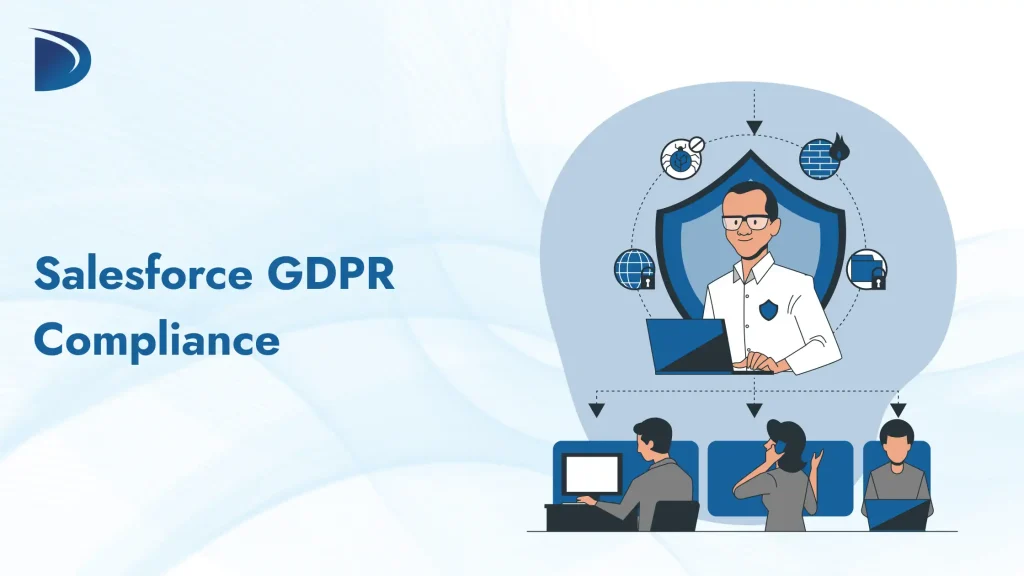
Keeping customer data safe is a key responsibility for businesses, especially with GDPR setting strict privacy rules. Salesforce GDPR compliance helps companies follow these rules by providing tools to manage personal data securely. Understanding how Salesforce supports GDPR compliance helps businesses protect user rights and remain within the law.
Salesforce GDPR Compliance and Key Data Protection Rules
Salesforce GDPR compliance refers to how Salesforce helps businesses comply with GDPR regulations when handling customer data. The General Data Protection Regulation (GDPR) is a law that protects personal data and privacy for individuals in the European Union (EU). Salesforce provides tools to manage consent, data access, security, and deletion requests to meet these legal requirements.
Importance of Managing Customer Data Securely and Legally
Prevents unauthorized access and data breaches.
Builds trust with customers by respecting their privacy.
Avoids legal penalties for mishandling personal data.
Why Businesses Using Salesforce Must Comply with GDPR
Non-compliance can lead to heavy fines and reputational damage.
Salesforce provides built-in features, but businesses must configure them correctly.
Proper data management reduces risks and improves customer confidence.
Who Needs to Comply with GDPR?
Businesses based in the EU (European Union).
Companies outside the EU that collect or process data from EU customers.
Any organization using Salesforce to store or manage personal data of EU residents.
Salesforce GDPR Compliance Certifications and Legal Support
Salesforce adheres to strict data security standards and holds certifications that help businesses meet legal requirements for data protection. These certifications address various aspects of privacy, security, and compliance.
Salesforce Compliance Certifications
ISO 27001 – Confirms secure data management practices.
SOC 2 & SOC 3 – Verifies privacy, security, and data availability controls.
FedRAMP Authorization – Supports U.S. government security standards.
Binding Corporate Rules (BCRs) – Allows legal data transfers within Salesforce.
Legal Support for GDPR Compliance
Data Processing Addendum (DPA) – Defines Salesforce’s role in handling customer data.
Standard Contractual Clauses (SCCs) – Supports legal international data transfers.
Privacy Impact Assessments – Helps businesses assess risks related to personal data.
GDPR Readiness Guides – Provides resources for meeting GDPR requirements.
Salesforce GDPR Compliance Features for Data Security
Salesforce provides tools to help businesses comply with GDPR and protect customer data. These features support privacy management, secure information, and maintain records for legal compliance.
Feature
Purpose
Data Masking
Hides sensitive data from unauthorized users, reducing exposure risks and keeping private information secure.
Consent Management
Tracks and manages user permissions for data collection and communication, helping businesses follow privacy preferences.
Data Encryption
Protects stored and transmitted data by making it unreadable to unauthorized users, lowering the risk of breaches.
Audit Trails
Keeps a detailed record of data access and changes, providing transparency and tracking for compliance purposes.
Data Access Controls
Restricts who can view or edit specific data, helping prevent unauthorized use or leaks.
Automated Data Retention
Helps businesses store data only for as long as needed, deleting it when it is no longer required.
User Access Logs
Records login activity and data usage, making it easier to monitor and investigate potential security issues.
Data Anonymization
Replaces personal data with random values, allowing businesses to keep useful records without exposing identities.
Salesforce GDPR Compliance and Data Subject Rights
i) Right to Access – Users can request a copy of their personal data stored by a business.
Businesses must provide the data within one month.
The request should be free unless excessive or repetitive.
Users can ask how their data is being processed.
ii) Right to Rectification – Users can ask for incorrect or incomplete data to be updated.
Applies to both stored and shared data.
Businesses must correct errors within a reasonable time.
Users can provide additional details to complete their records.
iii) Right to Be Forgotten – Businesses must delete personal data when requested unless legal reasons prevent it.
Applies if data is no longer needed for its original purpose.
Cannot override legal or contractual obligations.
Includes removing data from backups and third-party services.
iv) Right to Data Portability – Users can get their data in a usable format and transfer it to another service.
Data must be provided in a structured, commonly used format.
Applies only to data given by the user, not generated by the business.
Transfers should not negatively affect others’ rights.
Practical Steps to Configure Salesforce for GDPR Compliance
Setting up Salesforce for GDPR compliance enables businesses to manage customer data legally and securely. Proper configuration protects privacy, controls access, and supports user rights. Below are key steps to meet GDPR requirements.
Use Consent Management – Track user permissions for data collection and communication.
Set Data Access Limits – Restrict access based on roles and permissions to prevent unauthorized use.
Apply Data Masking – Hide sensitive information with field-level security and encryption options.
Turn On Data Encryption – Protect stored and transmitted data using Salesforce encryption settings.
Enable Audit Trails – Maintain records of data access and changes for security tracking.
Set Up Data Retention Rules – Automate data deletion or archiving when data is no longer needed.
Allow Data Portability – Use export tools to provide users with their personal data upon request.
Handle Data Deletion Requests – Ensure both manual and automated deletion methods comply with GDPR requirements.
Review Compliance Regularly – Conduct audits to verify privacy settings, access controls, and data handling.
Train Employees on GDPR – Educate staff on using Salesforce GDPR features to protect customer data.
Do’s and Don’ts of Salesforce GDPR Compliance
Do’s
Why It Matters
Don’ts
Why It’s a Problem
Get Clear User Consent
Users must agree to data collection.
Collect Data Without Consent
Leads to legal issues and fines.
Use Data Protection Measures
Keeps personal data safe.
Ignore Security Measures
Increases risk of data breaches.
Allow User Data Requests
Gives users control over their data.
Refuse Data Access Requests
Violates GDPR rights.
Check Compliance Regularly
Keeps data handling up to standard.
Ignore Policy Updates
Can lead to outdated practices.
Limit Data Collection
Reduces unnecessary risks.
Store Excess Data
Holding extra data increases liability.
Keep Records of Data Use
Helps show compliance when needed.
Lack Documentation
Makes proving compliance difficult.
Follow Data Retention Policies
Deletes data when no longer needed.
Keep Data Longer Than Allowed
Creates security and legal risks.
Report Data Breaches on Time
Helps manage security incidents properly.
Hide or Delay Breach Reports
Can lead to heavy fines and reputational damage.
Salesforce GDPR Compliance Data Deletion Options
Salesforce provides several methods to manage data retention and deletion in accordance with GDPR compliance rules. Businesses must delete personal data when it is no longer needed or when users request its removal.
Methods for Data Deletion in Salesforce
Manual Data Deletion – Admins can delete individual records or bulk data using Salesforce record management tools.
Automated Deletion – Workflows and scheduled processes can automatically remove data based on predefined rules.
Archiving Non-Personal Data – Instead of deletion, businesses can store non-sensitive data for future reference.
Soft vs. Hard Deletion – Deleted records first move to the Recycle Bin (soft deletion) before permanent removal.
Backup Considerations – Deleted data may still exist in backups for a limited time before being erased.
Salesforce GDPR Compliance Security Measures and Reporting
Salesforce includes security features that help businesses comply with GDPR and protect customer data from unauthorized access.
Data Encryption – Encrypts stored and transmitted data to keep information secure.
Access Controls – Limits data access based on user roles and permissions.
Breach Notification – Supports reporting processes to notify users and authorities of security incidents.
Regular Compliance Audits – Enables businesses to track and review security measures to maintain compliance.
Logging and Monitoring – Records user activity and data changes to detect unauthorized actions.
Two-Factor Authentication – Provides an extra layer of security to prevent unauthorized logins.
Frequently Asked Questions
Can Salesforce automatically make a business GDPR compliant?
Salesforce GDPR compliance tools help businesses manage customer data securely, but proper setup is required. Companies must configure consent tracking, security settings, and data retention rules. Although Salesforce provides support, businesses are responsible for complying with GDPR requirements.
How does Salesforce handle GDPR data deletion requests?
Businesses using Salesforce GDPR compliance features can delete data manually or through automated processes. Deleted records are first moved to the Recycle Bin before being permanently removed. Backup policies should comply with GDPR rules to avoid retaining data longer than permitted.
What risks do businesses face if they do not follow GDPR with Salesforce?
Ignoring Salesforce GDPR compliance features can lead to privacy issues and legal problems. Mishandling personal data may damage reputation and erode customer trust. Businesses should regularly review data policies and security settings to maintain compliance.
Does Salesforce help with GDPR data portability requests?
Salesforce GDPR compliance includes data export tools that allow businesses to provide user data in a structured format. This supports GDPR portability requirements, helping customers transfer their personal data securely. Businesses must comply with legal requirements when handling these requests.
Wrapping Up
Salesforce GDPR compliance enables businesses to manage customer data securely and adhere to privacy regulations. Using Salesforce tools for consent tracking, encryption, and access control reduces risks and supports legal compliance. Businesses must configure these features correctly to meet GDPR requirements and protect user rights.
Dadhich Rami is an experienced professional with over 9 years in the tech industry, specializing in both Android development and Salesforce solutions. He began his career as an Android developer, focusing on creating user-friendly and efficient mobile applications. Over time, Dadhich expanded his expertise to Salesforce, where he has customized and optimized CRM systems to meet diverse business requirements.



 Differenz Force
 Shyam Agarwal
 Dadhich Rami